

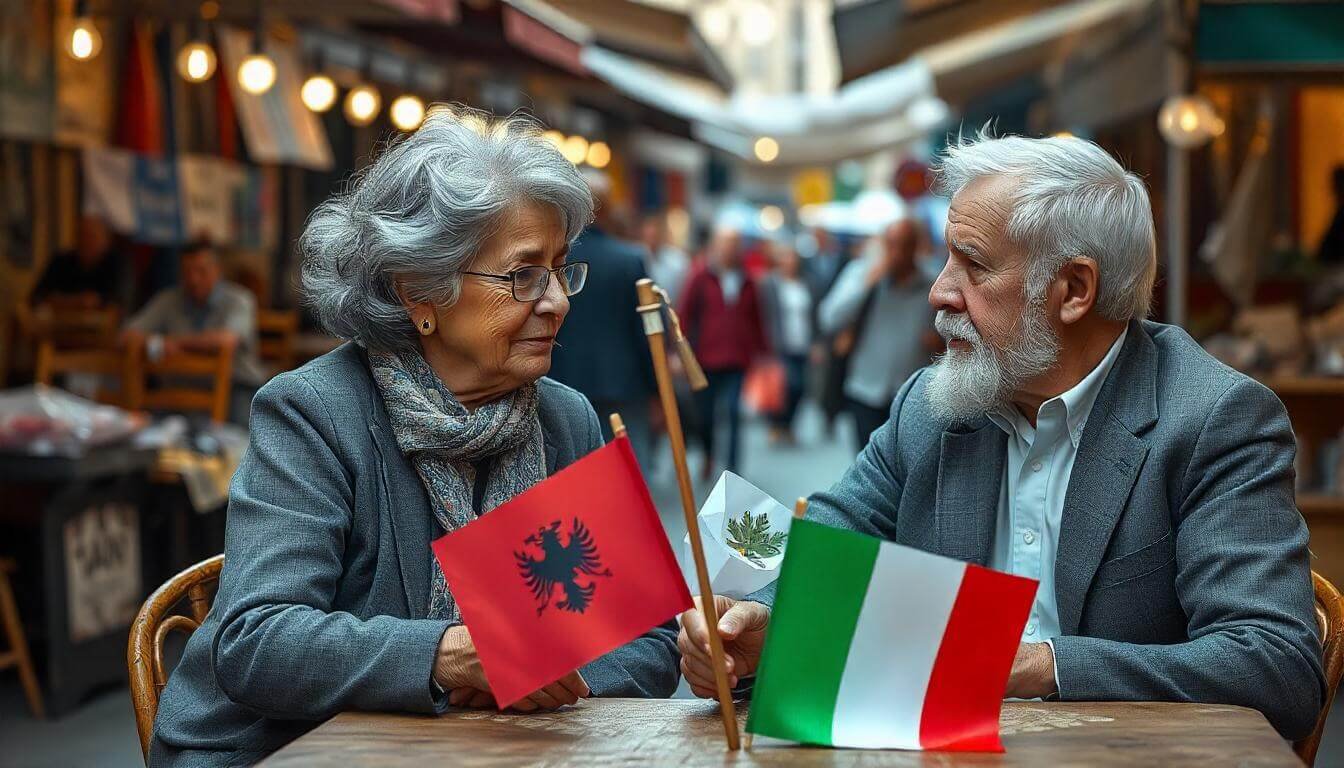
Will ’Albania still be a favorite destination for Italian retirees? About 3,000 are those who have moved their residence, domicile, economic and emotional interests here. The reasons are many.
Albania is very close and well connected with Italy, Albanians are very hospitable and affectionate to Italians, the climate in coastal areas is mild for a large part of the year, the food is healthy and also affected by the style of tricolor cuisine, the cost of living is very low, the cost of electricity is very low, the Italian language is still widespread and it is not necessary to learn Albanian, a fascinating but complex language.
But most importantly, there is the complete defiscalization of pensions paid from Italy . Albanian pensioners pay no tax on their pensions, and this treatment has been extended to the pensions of Italians living here as well. Zero taxation allows especially those who do not enjoy high pension checks to be able to afford living conditions here that would not be possible in Italy.
In recent weeks,however,rumors have been chasing each other,often uncontrolled and confusing regarding the new features introduced by the tax law,which moreover came into effect as early as January 1,2024.
According to these rumors, the new law (29/2023) that repealed the previous one(8438/1998) would have introduced a 15% taxation of pensions received in Albania by Italians. On what is this interpretation based ?
Both the old and new laws do not include pensions as sources of income.
The repealed law, however, in Article 8/1 explicitly defined as exempt income the “.1/1. Income from pensions and other similar benefits of foreign nationals of Albanian origin or from European Union countries, holders of residence permits in the Republic of Albania, as well as foreign nationals who have obtained Albanian citizenship and are residents of the Republic of Albania and who benefit from such income according to the legislation of the country in which they receive the pension or other similar benefits”
In the new law this specific exemption is no longer there. And this has raised many doubts and even concerns among Italian retirees
The regulations effective January 1, 2024 actually change nothing for the pensions of Albanians, which will continue not to be considered a source of income. In fact, the law only talks about taxation of private pensions from pension funds. and Article 3 paragraph 12 excludes from this category pensions from the mandatory contributory system. And what does the law say about pensions provided by from Italy for its citizens residing in Albania? Nothing specific,
There is, however, Article 11 paragraph 3 includes among income not subject to tax those ’exempt under international agreements ratified by the parliament of the Republic of Albania”.
Will this be enough to confirm the current regime for Italian pensioners who-in any case-have not received any tax claims related to pensions received in 2024 throughout 2025?
Could an explanatory circular from the Tirana Revenue Agency clarify this?
Meanwhile, there are also questions about why the Albanian government might have an interest in taxing the pensions of Italians.
Strictly speaking, this interest is unfounded.
A taxation of 15% would not bring significant revenue into the Albanian state coffers. In fact, it would actually force the vast majority of Italian pensioners to leave Albania and go to zero-tax countries such as Slovakia and Hungary and , from 2027, Croatia.
A massive exodus of Italian pensioners would have significant negative impacts on the economies of major cities, especially Durres and Vlora.
Moreover, unlike what happened in Portugal, the presence of many pensioners in Albania is not the cause of price increases, which have risen for other reasons.
On the contrary. Because pensions are paid in euros and the euro has depreciated by 10% against the Lek in the past two years, Italians“ pensions have even seen a reduction in their purchasing power. In fact, they have already suffered a hidden ”tax" of 10%


 Italian
  Albanian
  English