

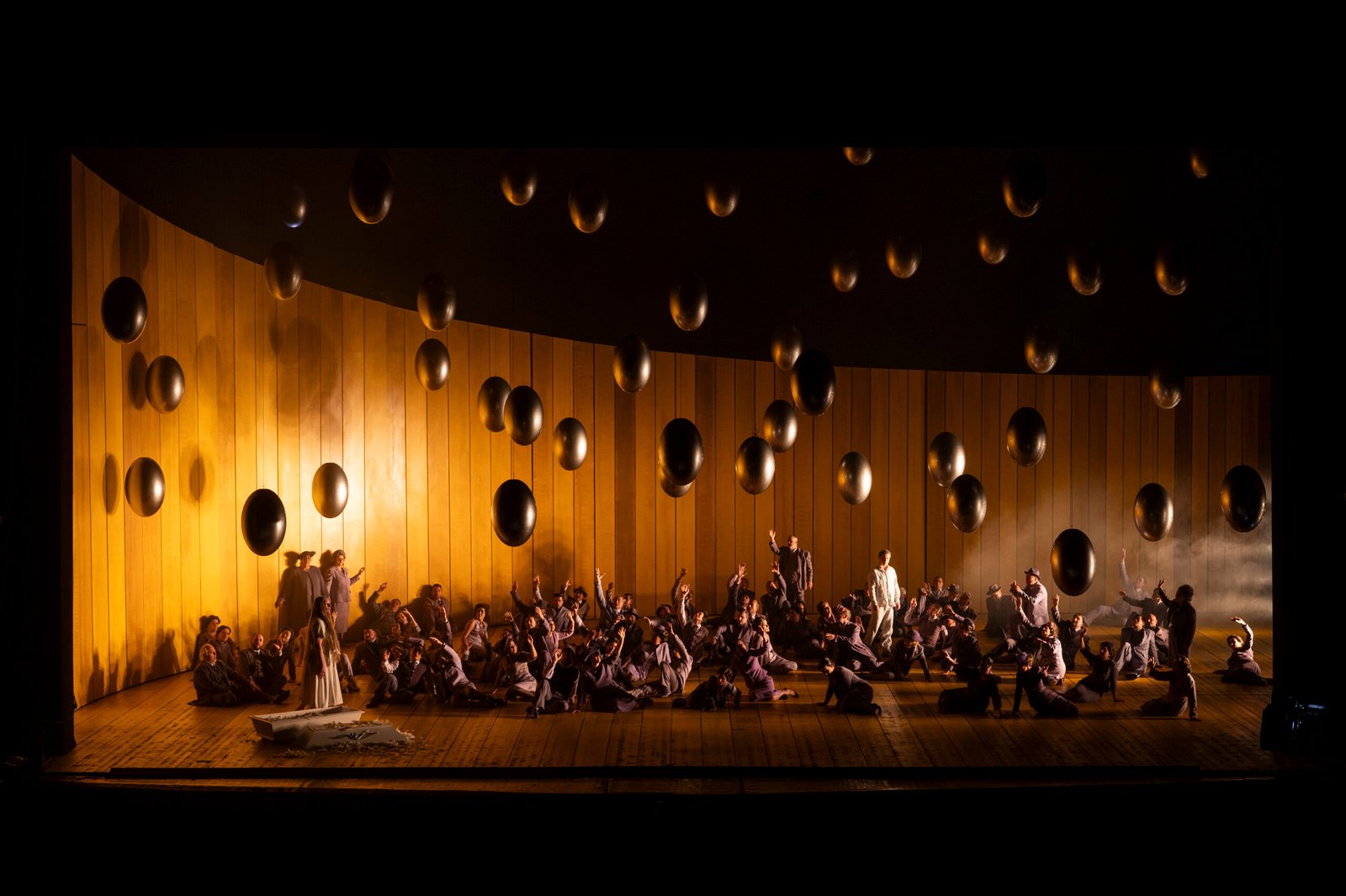
Rome Opera House's new season opens with a gesture of strength and vision: Lohengrin returns to the Costanzi after fifty years and for the first time in German. The romantic Wagner is thus placed at the center of a Roman scene now fully reintegrated into the international circuit.
By Rosalba Panzieri
Richard Wagner wrote the music and words of this three-act romantic opera, for which he took his cue from “Parzival,” a medieval poem by Wifram von Eschenbach, caught up in a raging creative fever as he recounts in “My Life.” Just as he was taking spa treatments, he was assailed by the urge to write and interrupted his bath. “I jumped out impatiently,” the composer wrote, "I gave myself just enough time to dress decently and off like a madman home, to throw on paper what was pressing me. The outcome was a monumental romantic work that had been awaited in Rome for decades.
Great debut for all
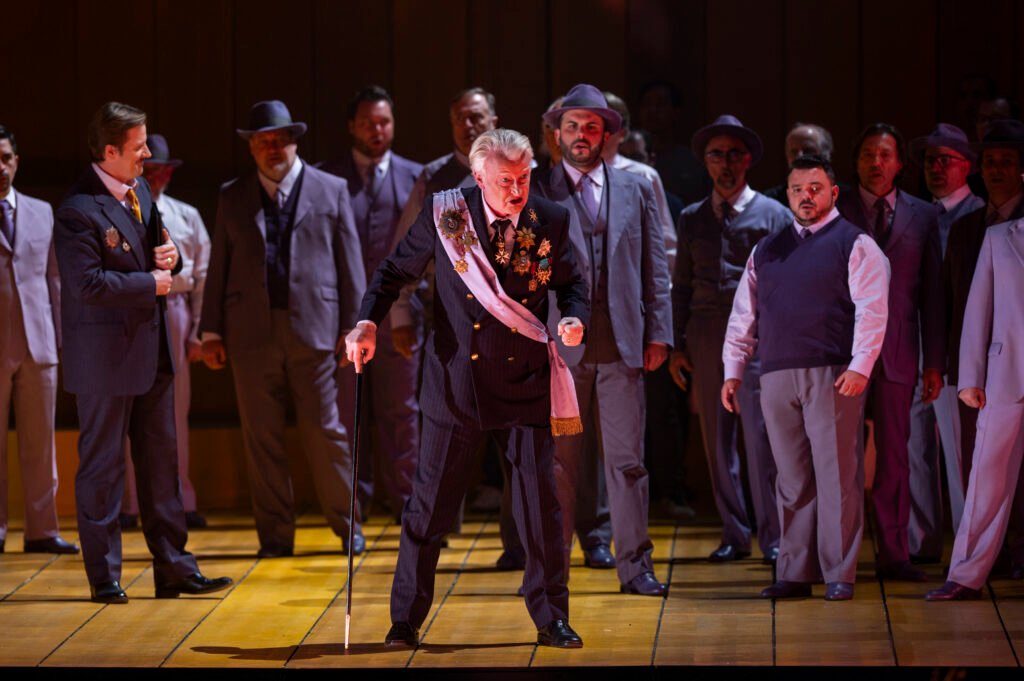
It is a return that smacks of ritual and rebirth, entrusted to the Wagnerian debut of Music Director Michele Mariotti, director Damiano Michieletto and tenor Dmitry Korchak. The co-production with Valencia's Palau de les Arts and Teatro La Fenice confirms the global vocation of the Costanzi, now a creative laboratory capable of dialogue with Europe. Alongside Korchak, a cast of prestigious voices - from Jennifer Holloway (Elsa) in his Roman debut in Clive Bayley, Tómas Tómasson, Ekaterina Gubanova and Andrei Bondarenko-led by the Orchestra and Chorus of the Rome Opera conducted by Ciro Visco. Michele Mariotti, 2017 Abbiati Prize winner and a constant presence in the world's major theaters, sees in Lohengrin the natural fulfillment of a path that wants an open, curious theater capable of speaking different languages. Damiano Michieletto, celebrated by the New York Times and creator of the Caracalla Festival 2025, tackles Wagner by giving back to the characters a human vibration, a heart that pulses under the armor of the myth, from the struggle between individual and mass, passing through the fragility of the love between Elsa and Lohengrin, to the tension between history and legend.
Completing the picture are the young artists of “Fabbrica” - Young Artist Program, a sign of the formative and international vocation of the Rome Opera, which continues to grow as one of the most vital and recognized centers of the European opera scene. In this reading, Lohengrin opens to the audience as a territory of enchantment, a suspended space in which spirituality finally finds an opening. The swan, the absolute emblem of the myth, appears not as a figure but as a transfigured concept. It is an absence that becomes presence, a symbol that becomes a question.
An archetypal question
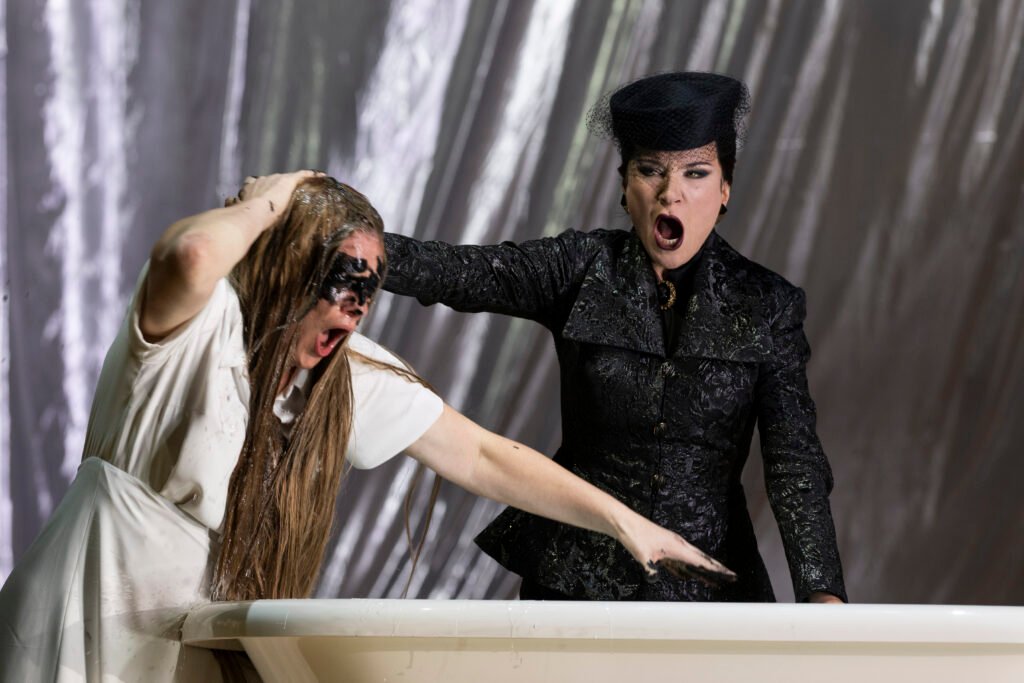
What does it mean to love? And, again, is the human capable of faith? Lohengrin provokes us. It highlights how predestined we are to misfortune, how the desire to understand, to know, to capture is the tombstone of the spirit, of the soul of all that asks for a blind gaze to reveal itself in full light. Elsa cannot bear the doubt, none of us humans could, and she breaks her promise of fidelity. She is neither right nor wrong; she is only human. Immersed then in a muddy, dark, carnal dimension that demands satisfaction of the only way she has to access truth: asking the question that satisfies rational knowledge. Lohengrin, by contrast, comes from heaven, pertaining to the divine. What Wagner is telling us with this opera in which everyone loses. Feeling is a cognitive form, which human beings too weakly and imperfectly surrender to. But it also tells us that it is compassion that is the only meeting point between human and divine, the only gateway to the only form of eternity that can be experienced on earth. We should start from here, now, at every latitude, the protagonists on stage seem to admonish. Only then, perhaps, can we act out the answer to the question: what is love?
A masterpiece of sound investigation
On the musical level, Michele Mariotti worked with sculptural care. The conductor shaped volumes with millimeter precision to create the “sound of elsewhere,” a metaphysical timbre that contrasts with the sonorous physicality of the “villains,” which is more corporeal, more earthy. “Because Lohengrin,” says Mariotti, "is a human fairy tale, a continuous oscillation between abyss and ecstasy, between compassion and destiny. And compassion is precisely the element that drives the hero to descend into the world of men. Few preludes in melodrama have the evocative power of Lohengrin's: a single melody, a counterpoint entrusted to the violins, a breath that seems to come from another world." Intense and fully successful is the work done with the singers, most notably the lead singer Dmitry Korchak, who succeeds in restoring the arduous childlike candor in the moving final farewell.
The “Italian” character of the opera emerges from this chisel work: not because it is a domesticated Wagner, but because the principle with which the musical material is shaped, the care of the singing, the clarity of the phrasing, the dramatic tension, are all elements that dialogue with our tradition. “It is an opera full of ‘concertati’-Mariotti explains-which requires discipline when everyone is singing and offers the stimulus to work on dynamics because when the voices fit together it is necessary to always clarify what the plot is. We worked a lot on sonorities.” The singers, together with the Orchestra of the Teatro dell'Opera di Roma, faced this challenge with absolute dedication, returning a Lohengrin that vibrates with humanity, light and mystery. The repetition of the melodies, which were marvelous, highlighted well the vocal agility and the great space left for coloraturas. If Ortrude dialogues perfectly with the orchestra, it is Elsa who offers one of the highest moments for wisdom and emotion. Elsa's poignant melody of abandonment as she sings of true love generates an outpouring between singer and orchestra, between Jennifer Holloway beginning the song and the clarinet continuing it.
Scenography torn between present and eternity
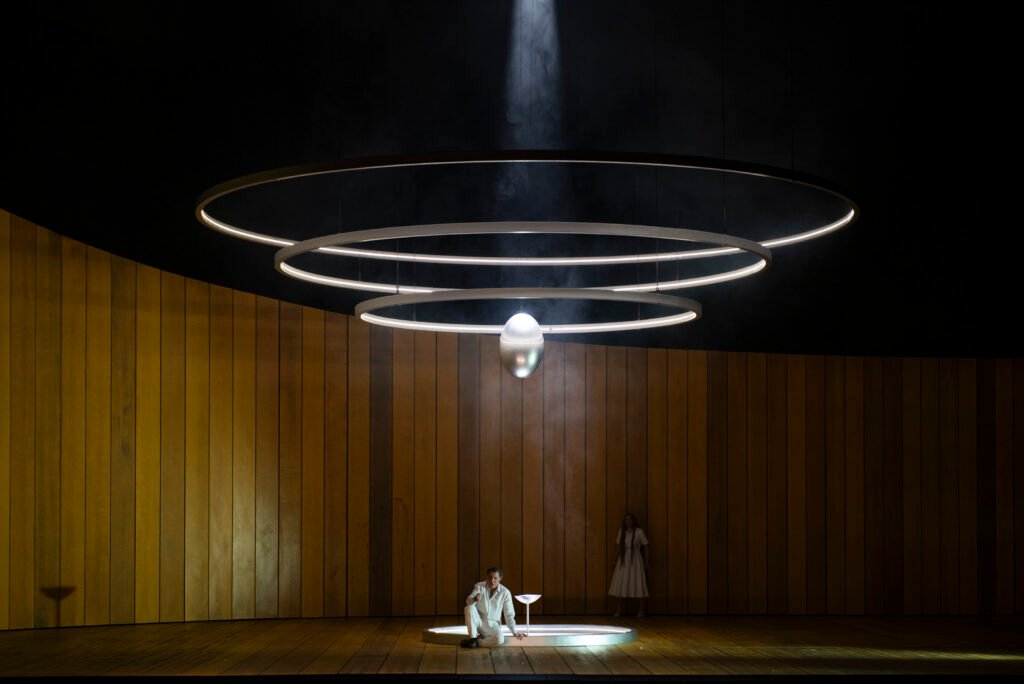
“We took the monumental story of Lohengrin and made it dialogue with a contemporary aesthetic,” explains set designer Paolo Fantin. The Middle Ages thus become a bridge to our time, a language that allows each person to recognize in the open symbolism of the scene his or her own experience, wounds, and expectations. It is not the swan who leads the hero, but Lohengrin who drags a white coffin engraved with his image. The coffin contains the body of little Goffredo, Elsa's lost brother. The myth thus cracks, humanizes, and becomes a tale of mourning and hope. The scenic material follows the same path of approach to the present, from the wood that encloses the community and turns into a courtroom, to the molten silver (a substance created especially for the Opera) that introduces an otherworldly dimension. In the center of the scene is an egg, symbolizing origin and mystery, but also the doubt that will crack the love between Elsa and Lohengrin. First there is the marriage of human and divine, expressed in the silver circles; then the egg breaks, blinding Elsa, and earthly matter shatters, taking away footholds and certainty. There is nothing solid anymore. Only the blinding light of the supernatural remains, which only a child can sustain. Innocence thus becomes the only gaze capable of seeing.
 Italian
  Albanian
  English