

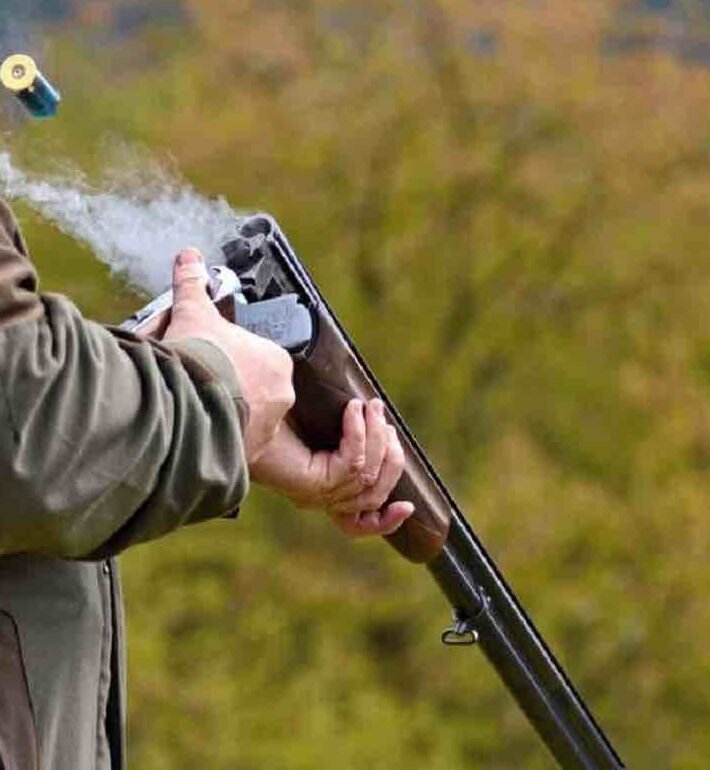
The new hunting regulations, already approved by the Senate and now under discussion in the Chamber of Deputies, are alarming associations that have been watching with growing concern for months at the proposed law 2984, dubbed the "shoot-everything" law, which is beginning its process in the Chamber's Agriculture Committee and intends to amend Law 157/92.
A decisive week is opening, as the Commission will begin informal hearings with the country's main environmental and scientific organizations: Lipu, Legambiente, Wwf, Enpa, Lac, Oipa, the Italian Society of Ethology, and the Italian Center for Ornithological Studies. A broad, competent, and united front, which has long been denouncing the risks of regulatory intervention capable of overturning the framework of the framework law on wildlife. 57 associations, including Lav, Leal, Legambiente, Lipu BirdLife Italia, Wwf, Enpa, Greenpeace, Oipa, and Lndc, have sent a formal letter to the President of the Chamber, Lorenzo Fontana, requesting that the measure be examined by the Environment Committee as well, in addition to the Agriculture Committee where it was assigned as a referring committee. In parallel, in Brussels, the European Commission has confirmed that it is keeping the issue “very much on its radar,” while deferring any substantive comments until the conclusion of the Italian legislative process.
The heart of the reform is a cultural shift, even before it is a legal one: the hunter is elevated to a “bio-regulator,” a definition that overturns the logic of Law 157/92 and shifts the focus from wildlife protection to wildlife management. It is a paradigm shift that weakens the role of science and strengthens that of those who hunt.
ISPRA's opinion—the only public body that analyzes the conservation status of species and assesses the sustainability of harvesting—will no longer be binding but only consultative. From a technical-scientific safeguard, it becomes a suggestion. And alongside the Institute is placed the Faunistic-Hunting Technical Committee, where hunter representatives also sit: those who must determine if a species can withstand harvesting will find themselves deciding together with those who carry out that harvesting. The bill introduces a series of significant changes to hunting regulations. Among the main ones are the removal of the February 10th limit, previously in place to protect the start of pre-nuptial migration; the expansion of the use of live decoys, which would go from a defined numerical limit to unlimited availability; and the inclusion of new species among those that can be hunted, such as the wild goose and the pigeon. The ibex, initially present in a draft and then withdrawn after observations made by various scientific bodies, has instead been excluded. The text also provides for the possibility of carrying out hunting activities on maritime state property.
Other changes concern hunting methods: the bill allows the use of thermal imaging scopes and activity after sunset, extending the practice into areas that were previously off-limits and in proximity to hiking trails. There is also a provision that introduces a ban on “obstructing or slowing down” hunting activities, with related penalties.
The data:
“Behind this bill, interests of a narrow circle lie hidden, which have nothing to do with common sentiment, which repudiates hunting, a barbaric and unacceptable practice for a civilized country,” argues Gian Marco Prampolini, president of Leal, the Anti-Vivisection League, who invites “consideration of the costs of European sanctions that fall on taxpayers. While we talk about the costs incurred to remedy the damage to agriculture, estimated at around 15 million euros, we remain silent on how much Italy has already paid to Europe for infringement procedures, which would be much higher, in just six months of bureaucratic delay we would have costs equal to 20 million euros.”.
The European Commission has flagged critical issues regarding some aspects of the bill: extending hunting activities beyond February 10 and downgrading ISPRA's opinion are considered non-compliant with the Birds Directive. Brussels also recalls that an EU Pilot procedure initiated in 2023 is already underway regarding the use of live decoys, and an infringement procedure is pending concerning Italian hunting legislation.
“This measure, announced as necessary to resolve problems arising from coexistence with wildlife, contains virtually nothing on that subject. Instead, the text focuses heavily on granting new and broader concessions to hunting activities, such as the revival of the anachronistic practice of using live decoys and the possibility of extending the hunting season,” comments Giovanni Albarella of the Hunting and Poaching Division at Lipu – BirdLife Italia. According to ISPRA data, 28% of the vertebrates assessed in Italy are at risk of extinction, 26% of nesting birds are threatened, and between the 2017 and 2023 hunting seasons, over 32 million game birds were killed.
“A bill that is an insult to science, an insult to Italians, an insult to security, an insult to European laws.
"It's just a favor to the arms industry and hunters—who make up only 1% of the population—and to their most extremist faction. That's why we, as members of parliament, are calling on our colleagues not to pass an anti-Italian law," says Edgar, president of Gaia Animali & Ambiente.
Meyer, recalling the continuously declining number of hunter registrations, stated that in the last two years alone, the number of hunting permits has dropped from 160,055 to 155,496. In the years 2016-2017, the number was equivalent to 738,000 units. “There is a fundamental misrepresentation: the current regulations are not being reformed. Rather, there is a clumsy and overbearing attempt to scrape the bottom of the barrel, through an exasperated expansion of hunting mobility, means, species, times, forms, and locations where one can hunt even more,’ declares the League for the Abolition of Hunting. ”The number of hunting victims is a topic that is too little discussed,“ Meyer continues. ”The data from the study by the association Victims of Hunting is clear: the number of victims unrelated to hunting activity is alarming. For every 33 hunters who are victims of themselves, there are 13 victims unrelated to the activity. In the last 20 years, approximately 1937 total victims are estimated.» This is precisely why Capellino Foundation has launched a new awareness initiative: a hard-hitting exposé video that shows the consequences of violence on wild animals without filters. The objective is clear: to inform, to stir consciences, and to invite citizens to act. This bill does not represent the will of Italians. In a historical moment when biodiversity is increasingly fragile, politics should strengthen the protection of wildlife, not weaken it. We ask Parliament to listen to the citizens and the scientific community who work every day for the defense of nature. Stopping the Hunting Bill means choosing to protect a heritage that belongs to everyone," declares Pier Giovanni Capellino, founder and President of Capellino Foundation.


 Italian
  Albanian
  English