

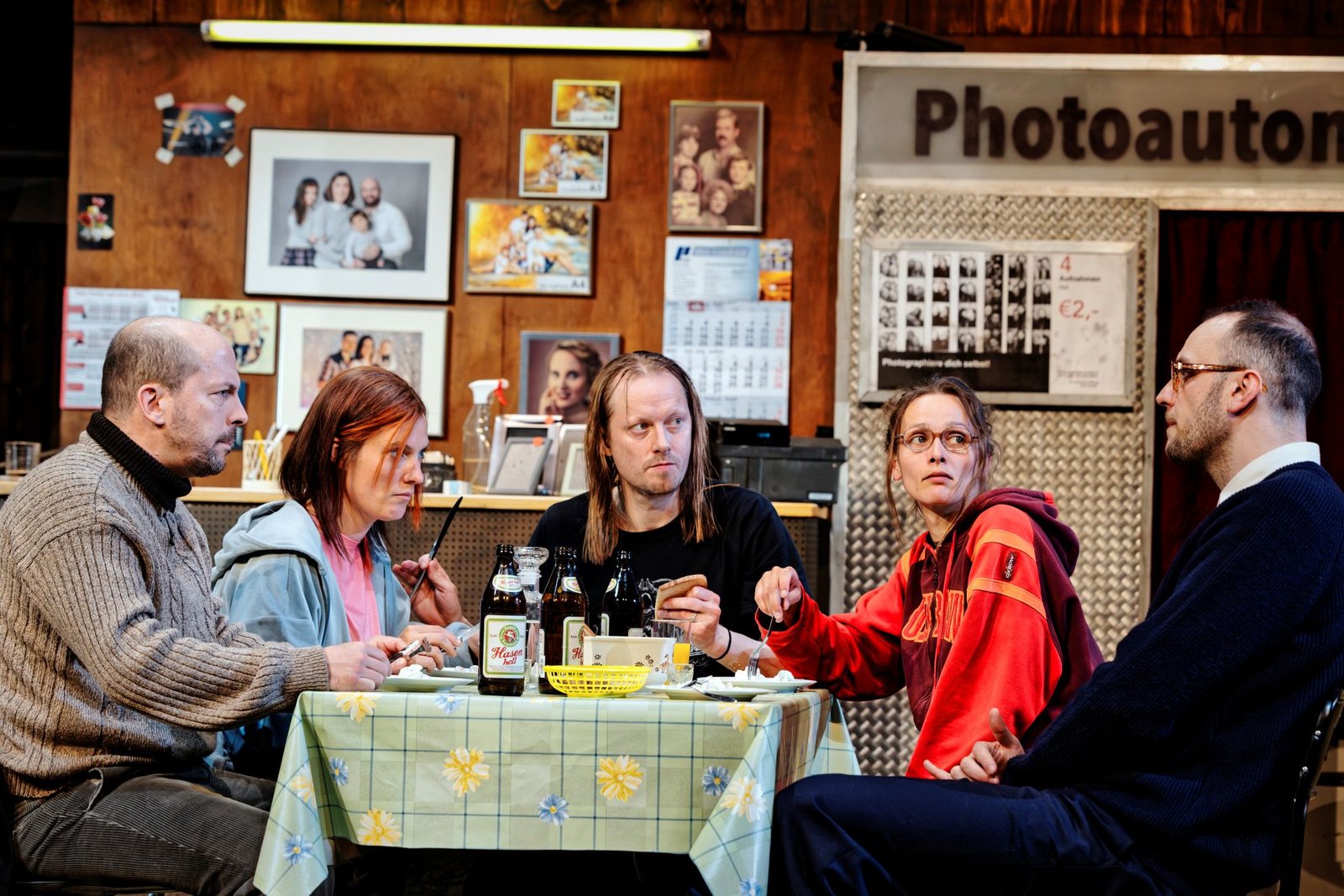
Thomas Ostermeier, a pivotal figure in European theater and artistic director of the Schaubühne, continues his investigation of social fractures and the shadowy areas of the human soul with Henrik Ibsen's “The Wild Duck,” staged at Teatro Argentina. The wounded duck that keeps swimming in the darkness of the attic is a symbol of young people who resist despite everything, who seek a way through the lies of adults and claim the right to be themselves. Ibsen speaks to young people because he takes them seriously, because he recognizes in them a moral force that society tends to repress. From Feb. 28 on stage in Berlin
By Rosalba Panzieri
Truth is nothing without mercy. He seems to tell us this, among his endless messages, The Wild Duck by Ibsen, a work that reveals all the grotesque selfishness of a world of adults made for adults, in which innocence is torn apart in the general distraction. A powerful work, capable of representing today's brush, which landed for the first time in Italy , at Teatro Argentina, after its French debut, bringing with it the usual radicality of Ostermeier's gaze.
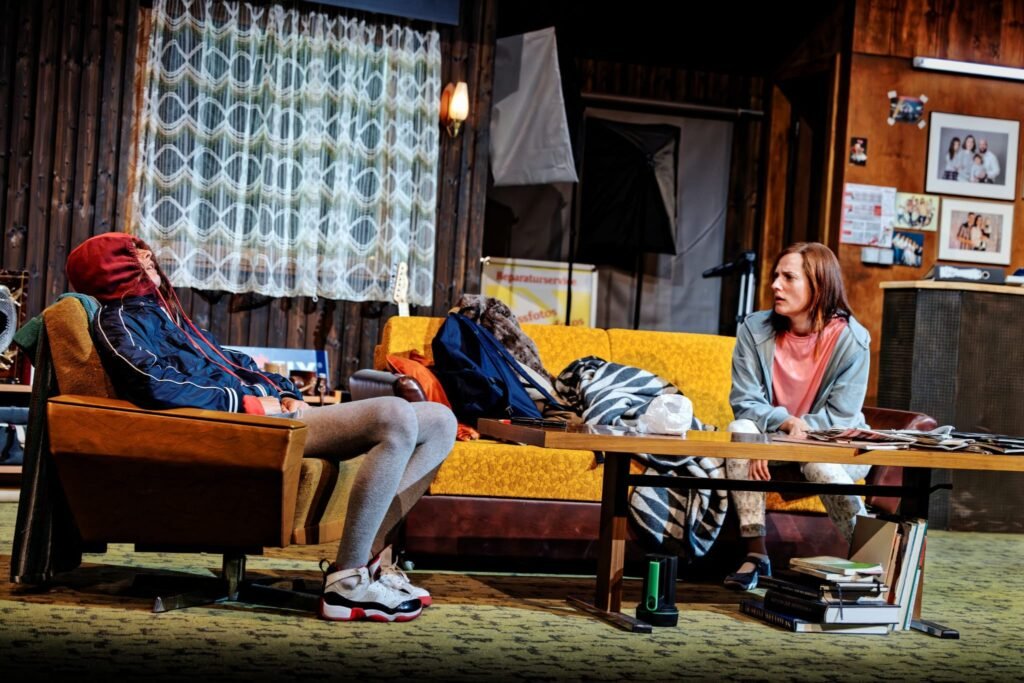
The production is by Schaubühne Berlin in co-production with the Festival d'Avignon and the Teatro di Roma, directed by Thomas Ostermeier.
In this reading, the German director approaches truth as an ambiguous device: a promise of liberation and, at the same time, a potentially devastating force.
Flight denied, a storyline about today
The microcosm of the Ekdal's, a family suspended between illusions and secrets, becomes a laboratory of fragility, through a self-mythologizing father, a grandfather sheltered in memory, a daughter marked by an illness no one wants to name. The irruption of Gregers, an obsessed idealist blinded by merciless moral transparency, shatters this precarious balance, showing how truth, when imposed violently, can shatter what remains of domestic happiness. At the center is young Hedvig, whose innocence becomes the seismic epicenter of a world built on lies. The tragic ending, which explodes all certainty in a gunshot, becomes the extreme demand for visibility of an ignored youth.
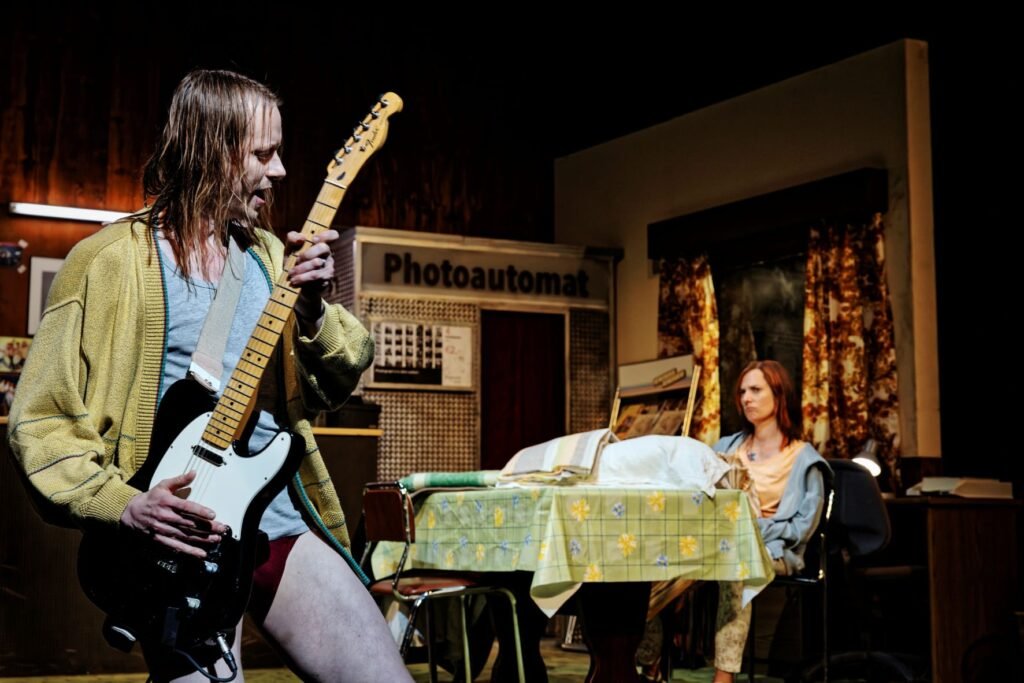
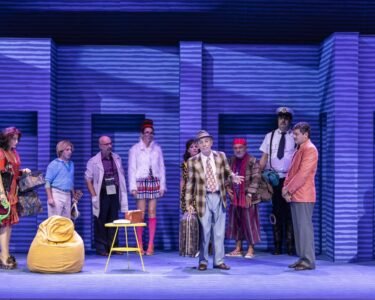
Ostermeier restores this tension with an edgy, uncanny staging that allows the spectator no escape. His direction delves into the Ibsenian text with surgical precision, bringing to the surface the removed traumas and ghosts that continue to haunt the present. “The Wild Duck” thus becomes not only a revisited classic, but a critical device that interrogates our relationship with necessary illusions and truths we cannot sustain. The actors offer a proof of extraordinary finesse, each traversing all emotional vibrations, returning as much the most intimate nuances as the most lacerating exasperations.
Still not a world for young people
Ibsen was a staunch defender of the younger generation, and his position within the cultural debate of his time, his focus on youth and women was not a narrative accident, but a consistent ethical and political choice. Indeed, his work is situated at the heart of the crisis of nineteenth-century modernity, when the bourgeois structures of family, morality and education begin to show their cracks. In this context, Ibsen identifies young people and women as the subjects most exposed to the contradictions of the social order, but also the most capable of perceiving its injustice. It is precisely The Wild Duck that becomes emblematic of this tension: the young Hedvig embodies the purity of gaze that the adult world does not tolerate, the ability to choose and imagine a different future. Her sensitivity, often dismissed by adults as naiveté, becomes instead the lens through which Ibsen shows the silent violence of convention. In this sense, the juvenile figure is not only victim but also revelatory: she is the one who sees what adults do not want to see. The wounded duck that continues to swim in the darkness of the attic is symbolic of young people who resist in spite of everything, who seek a way through the lies of adults and claim the right to be themselves. Ibsen speaks to young people because he takes them seriously, because he recognizes in them a moral force that society tends to repress, and he speaks of women because he sees in them, as in young people, the possibility of a truer, freer, more just world. Ibsen repeatedly denounced, in his speeches and letters, a society that stifles the moral growth of young people, educating them to become “copies of their fathers” instead of autonomous individuals. In her famous 1898 speech to the Norwegian Association for Women's Rights, she linked the women's question to the youth question, calling them both battles for human freedom. In her private writings, she criticized bourgeois education that imposes obedience and renunciation of inner truth. This view runs through her plays, where young people are often the only ones who perceive the cracks in the social order. This is where his modernity comes from: in recognizing young people's right and courage to choose who to be.
Director's Notes
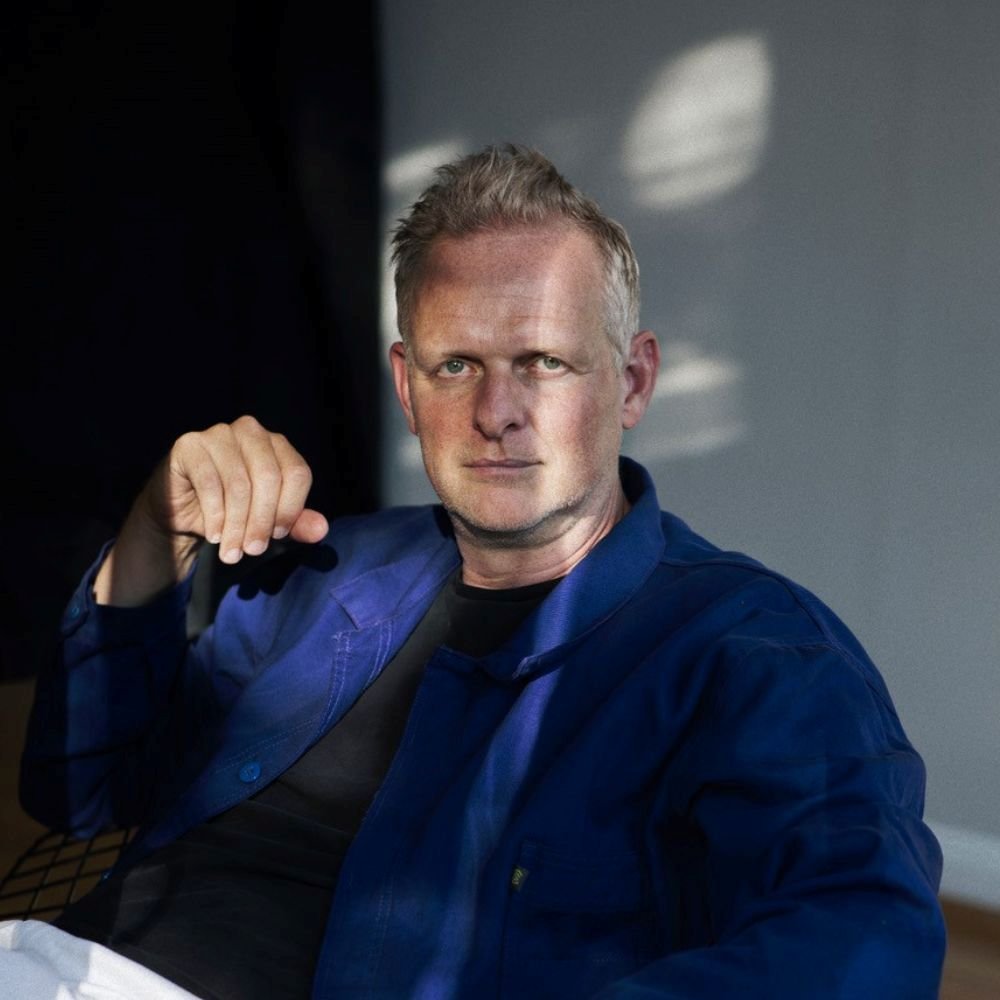
“The Wild Duck” offers a perfect canvas for Thomas Ostermeier, whose work, guided by relentless clarity, delves into the repressed past to reveal the ghosts that haunt the present: “For a long time," says the director, "I have developed a deeply personal relationship with Ibsen's work. His characters seem contemporary; they are driven by the desire to get rich and the urge to live, and they are not afraid of confrontation. It was important to me that Ibsen's words resonate in the present. Ibsen wrote The Wild Duck two years after An Enemy of the People, which I staged for the Avignon Festival in 2012. The two plays have a diametrically opposed relationship to truth. In An enemy of the people, the truth must be absolute; in The wild duck, instead, is evoked as a concept struggling to find its place in the world, as opposed to those who try to keep it hidden. Wild Duck can be read as a response to An Enemy of the People: does the truth deserve to be told at all times, or do we sometimes need to lie to survive? There seems to be a kind of dialogue between these two works. The duck symbolically represents this humble family, struggling to survive after all the hardships they have been overwhelmed by. The play offers no answers, but leaves the audience with many questions.”.
Upcoming performances, dates
“Die Wildente” (The Wild Duck) in Berlin (Schaubühne am Lehniner Platz).
February 28 to March 5, 2026.
“History of Violence”
February 27 to March 2, 2026
Adelaide Festival, Adelaide, Australia
“Call me Paris”
March 21 and 22, 2026
Arena del Sole Theater, Bologna, Italy
“Qui a tué mon père” (Who killed my father).
March 26-29, 2026
Comédie de Genève, Geneva, Switzerland
“Silence”
April 10 to 12, 2026
Centro Dramático Nacional, Madrid, Spain
“Changes”
May 8 and 9, 2026
Teatro della Pergola, Florence, Italy
“Die Seherin (The Seer)”
May 23 and 24, 2026
Teatro della Pergola, Florence, Italy
and June 15, 2026
Tbilisi International Theatre Festival, Tbilisi, Georgia
The Schaubühne is one of the leading German-language theaters, hosted worldwide and the creator of the internationally renowned “FIND” festival. Founded in 1962, in Berlin, by a group of students led by Jürgen Schitthelm, the Schaubühne has now become one of the most famous and renowned theaters in the German-speaking area. Since 1999 it has been directed by artistic director Thomas Ostermeier. As one of the five largest permanent theaters in Berlin, it is synonymous with modern and contemporary theater. The Schaubühne stages a playbill of at least ten shows per season, as well as a repertoire of about 25 existing productions. The repertoire is characterized by a critical and analytical, often political, view of social reality and includes both classical and contemporary works.
 Italian
  Albanian
  English