

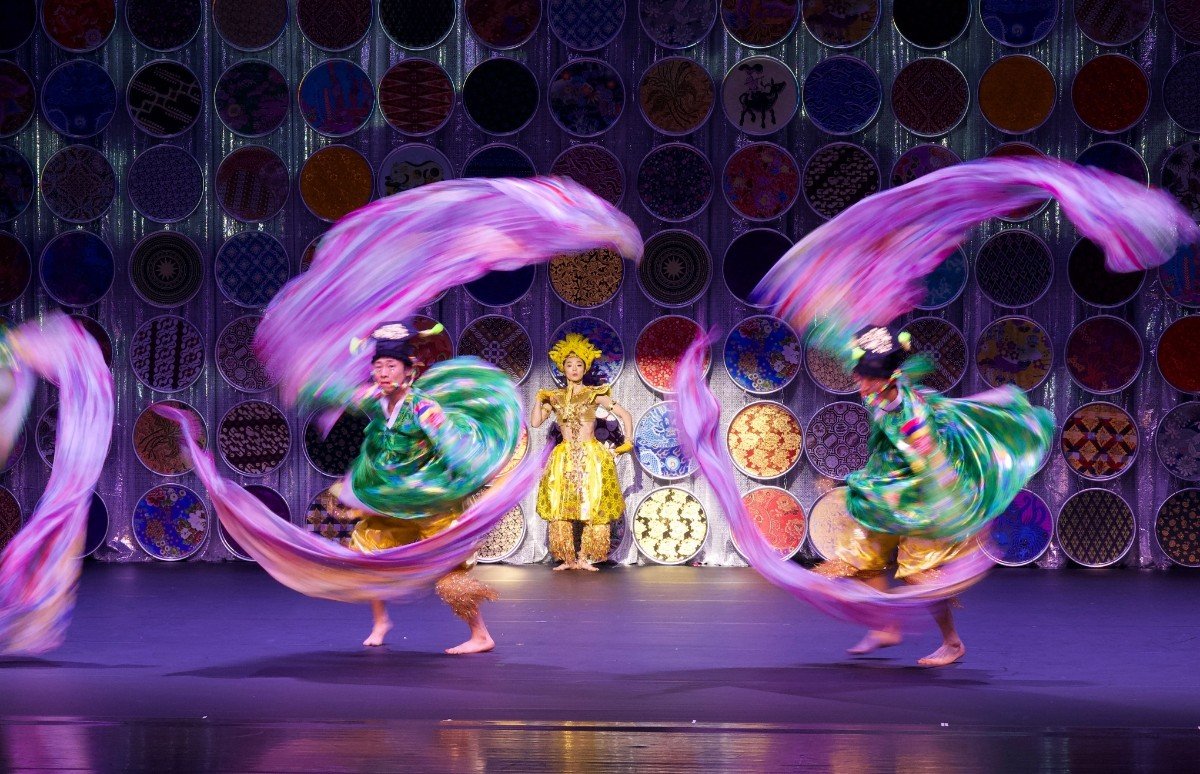
The 41st edition of the festival, which since 1986 has hosted the greatest artists of the international contemporary scene, has been presented in Rome. It has become a point of reference for theater, dance, performance, music, digital art, and a large section dedicated to children. This edition marks the reopening of the Teatro Valle. 100 performances for 240 shows and around 1000 artists from all over the world to remind us that dreaming is still a necessity.
By Rosalba Panzieri
On a continent marked by fractures, realignments, and new vulnerabilities, there exists a place where the will to meet and intermingle does not falter: the Romaeuropa Festival. True to its original and ever-renewed calling as a crossroads of languages, geographies, and visions, the festival reaches its 41st edition and returns to the capital from September 8th to November 15th. The festival confirms itself as a living organism, a laboratory where the arts do not merely represent the present, but question it, challenge it, and recreate it.
Since its founding, Romaeuropa has chosen to be a territory of relationships, a place where music, dance, theater, digital creation, and children's programs intertwine in a single collective experience. The words of the Foundation's President, Guido Fabiani, bear witness to this: “Europe is not just a cultural horizon, but a concrete practice of relationships.” In our present day, marked by instability and profound transformations, this vocation becomes even more essential.
General and Artistic Director Fabrizio Grifasi defines it as an act of responsibility, aimed at “preserving complexity, opening spaces for dialogue between different languages, geographies, and sensitivities.” “From this urgency,“ Grifasi emphasizes, "the forty-first edition restarts: an invitation to listen and to [consider] artistic creation as a still-living and necessary experience.".
A program balanced between tradition and innovation
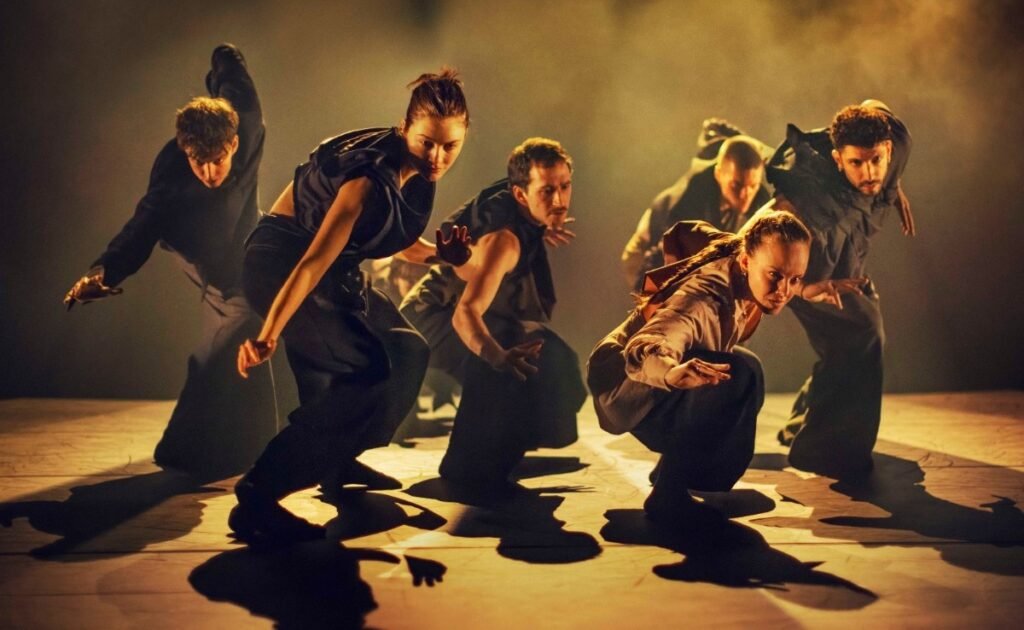
The 2026 edition opens with choreographer Sofia Nappi and the KOMOCO company, followed by Caterina Barbieri with ONCEIM and new compositions co-commissioned by the Festival and the Philharmonie de Paris. It's a start that immediately declares its direction, weaving a dialogue between generations and forms of sonic and bodily thought. Among the most anticipated returns is that of Romeo Castellucci with Faust. Done, Not Said, co-produced with the Teatro di Roma, which opens a new chapter in the long history of complicity between the Festival and SOCIETAS.
Alongside him, a constellation of international stars: Sasha Waltz, Benjamin Millepied with November Ultra, Wim Vandekeybus, Boris Charmatz, Rachid Ouramdane. And also the great European dance companies: Opera Ballet Vlaanderen, with works by Jan Martens, Anne Teresa De Keersmaeker and Christos Papadopoulos, and the return of the Ballet national de Marseille directed by (LA)HORDE, among the most emblematic presences in contemporary choreography.
But the Festival continues to be a place for breaking boundaries: the French Collectif XY arrives, fresh from the Avignon Festival; the Groupe Acrobatique de Tanger returns, directed by Raphaëlle Boitel; and choreographer Michael Vandevelde reinterprets Max Richter's reinvention of Vivaldi's Four Seasons. International perspectives multiply: Tiago Rodrigues, Nacera Belaza, Jaha Koo, Eun-Me Ahn, Pankaj Tiwari, Katerina Andreou with Carte Blanche, Ben Duke. Hildur Guðnadóttir with Osmium, Moritz von Oswald, Jlin, Jeff Mills, Maki Namekawa and Thomas Enhco for Keith Jarrett's The Köln Concert, Fatoumata Diawara, Kangding Ray.
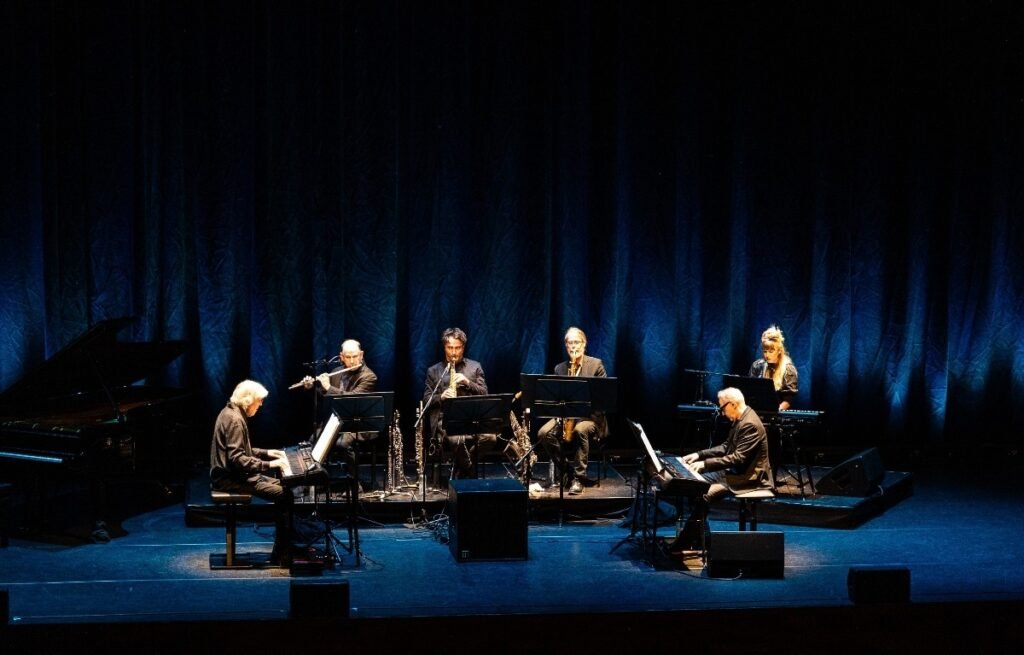
The music program expands to include Hans Werner Henze (with New European Ensemble and Carlo Boccadoro), Steve Reich (with Blow Up Percussion), Fluxus (with Tempo Reale), Philip Glass (with Philip Glass Ensemble, Vanessa Wagner, and Third Coast Percussion), the *Blade Runner* cine-concert with The Avex Ensemble, and Enrico Melozzi's The Classical Rave Party, featuring 100 Cellos and Giovanni Sollima.
Italy takes center stage with its artists
Central, as always, is national creation: Giorgina Pi, Marta Cuscunà, Pietro Giannini, Silvia Costa, Giacomo Bisordi with Fabrizio Sinisi, Marco D’Agostin with Marta Ciappina. And then there’s the HEIMAT project from the Silvio d’Amico National Academy of Dramatic Art, with Thom Luz, Ersan Mondtag, Fabiana Iacozzilli, Leonardo Lidi, and Leonardo Manzan. The ULTRA REF program at the Mattatoio confirms the Festival’s commitment to innovation and risk, while REF Kids & Family opens spaces dedicated to the new generations.
Also noteworthy is the participation of Alessandro Baricco and Gloria Campaner, and numerous Italian music stars, followed by Vinicio Capossela's musical theater.
The Valle Theater reopens its curtain
After sixteen years of closure, since 2010, the Teatro Valle – now named after Franca Valeri – is finally reopening its doors. A complex restoration has brought its historic structure back to light: interventions on the systems, the balconies, the decorative surfaces and the canvas ceiling, with the unexpected discovery of a medieval floor that slowed down but enriched the work. The reopening takes place right in the heart of the Romaeuropa Festival 2026, which has chosen the Valle to kick off a new season of contemporary creation. “Lemnos,” by director Giorgina Pi, inaugurates the theater—a work that intertwines myth, memory, and the female body, returning the Valle to its natural role: to be a place that hosts visions, risks, and imagination.
The festival's international network
Romaeuropa 2026 operates within a network of international relations that is not simply a framework, but an integral part of its identity. This year, the focus will be on the German scene for the 75th anniversary of diplomatic relations between Italy and Germany. Attention will also be given to the Flemish scene, as part of the three-year partnership from 2026-2028 with Flanders State of the Art. Equally important will be the celebrations for the 70th anniversary of the Rome-Paris twinning. Collaborations with institutions such as the Accademia Nazionale di Santa Cecilia, the Fondazione Teatro di Roma, the Teatro dell’Opera di Roma, Palaexpo, Fondazione Mattatoio, Villa Medici, MAXXI, Musica per Roma, Teatro Vascello, Short Theatre, Auditorium Conciliazione, Teatro Brancaccio, and Teatro Olimpico will also be strengthened.
In an era that tends to reduce complexity to slogans, Romaeuropa chooses the path of listening, the most arduous and fragile, but the most necessary. Here art is not an altar, but a crossing. And the public is not an audience, but part of a collective ritual that, for forty-one years, has continued to imagine Europe as a possible place.
 Italian
  Albanian
  English